OK quick survey.
In your place of study or business you see an 'official' looking sign with an obvious (to you anyway) punctuatio-grammatical error. for example:
"All cup's must be washed - It is not the cleaners job!!!"
Do you A)Probably not notice, and definitely not care,
B) Roll your eyes, grumble, and possibly make a sarcastic comment to an equally grammar aware colleague, or
C)Immediately pat your pockets in search of a sharpie, stickers and/or bottle of correction fluid to fix the offending notice?
If the answer is A) - why do you even READ this blog? Not that I'm discouraging you, but really, what's the attraction?
B)This response is pretty normal, I guess, and covers most people I know, but
C), ah C): these are my kindred, the grammar ninjas.
We're a shy and mostly passive aggressive breed. We rarely make ourselves known by vocally complaining, but left alone with an apostrophe free possessive and a marker, we really cannot be trusted. Some, like my friend Becky, will take no credit of any kind, painstakingly recreating the font, size and colour of the original text in order that her added punctuation should fade seamlessly in. The other approach is the '3 out of 10: please see me' approach. The angry, red scrawl which berates the sign maker by regressing them to their childhood English lessons. Missing punctuation and capital letters added, unnecessary letters scored through and sometimes even a teacherish comment at the bottom complaining about the lax standards of the establishment. This can be quite funny, and IMO, there's little excuse for errors in the signage of, say, an educational establishment, or any place of business that expects its employees to produce correctly spelled and punctuated work.
So maybe the discreet way of doing things is more tactful, but less noticed by the people who could stand to learn a little more. The red pen method might offend but at least points out what was missing in the first place. The apostro-free culprits at Becky's workplace seem to think that a bizarre irl version of Microsoft Spelling and Grammar Check exists in their corridors, ready at any time to magically undo their illiteracy. Would making both our corrections and our scorn more apparent do more to persuade them of the joys of literacy, or simply offernd them into a follow-up sign saying something along the lines of 'NOTICE! Dont deface the sign's?', resulting in greater rifts between colleagues?
Maybe the answer is in the technology. Googlemail recently trialed an application called 'Beer Goggles'. If you send an email late at night it makes you do long multiplication to prove that you're not drunkenly sending anything you'll regret. Perhaps a similar application could pop up before office workers are allowed near the printer. If you can't pass a simple grammar test, to don't get to hit print. It would make all of us pedants so much calmer...
Tuesday, 17 March 2009

Monday, 9 March 2009
The line between neologism and just buggering about.
Neologisms. Aren't they great? They have to be the ultimate goal of any writer. Just think: your reading public trust you so completely that when you invent a word - whose meaning is apparent because of your sheer expertise with the language - they just...start using it, and it makes it to the dictionary. Previous blogs have hinted at my love of a certain set of ancient yet robust anglosaxon expressions, but just as dear to my heart are words that have been invented by a known writer, and have then been taken on in general.
What got me on to this, you ask? Well. There is nothing so flattering yet faintly demeaning than the expression of surpise and admiration on a colleague's face when you, a mere peon - and a temporary peon at that - instantly 'get' and respond to an intellectual comment of theirs.
In this case, Paul, a wonderful teacher I've worked with before, of the type who talks down to no-one and yet includes everyone, used the slightly suspect word 'architectiologist'. I asked if he meant architect. "No", he said, "someone who STUDIES architecture, not someone who designs the buildings themselves..." "but...Architectiologist?" I said, disbelievingly, but willing to be re-educated: after all, for all I knew, this WAS a word. "It's a neologism." he said - quite haughtily, if I'm honest. "What, as of five minutes ago?" I returned, at which point he stopped and looked at me. "People don't usually know what 'neologsm' means" he said, with a glimmer of new respect. "I usually get [insert gormless look of incomprehension] "Huh?" or something similar ". Now. I felt happy that I was on the same page of the great vocab book of life with him enough that we could trade high-falutin' words over the kids' heads, but I also felt a little sad that he didn't automatically assume that I would know what a neologism was.
This, my friends, is what defines a geek of any genre. If you don't MEAN to look down on others, but it genuinely baffles you how anyone could NOT know anything as basic as the word neologism/particle theory/application program interfaces, you're officially a geek.
Here is my question, though: what does it take to make a goofy-made-up-word an official neologism? Is it the fame of the writer, or can a truly great word spring from an un known source? wo, for example, coined words like 'lol'?( now an official word in my book, as is can be conjugated: I lol, you lol she/he/it lols, I loled, we all have loled.) Can I claim that "Advenstruate" is a neologism, meaning to menstruate in an adventurous way? (Shout out to Adventures in Menstruating, there, btw.) or do I need to wait until people other than me and people I bribe are using it before it counts?
Well, who confinkles? (worth a try, eh?)
And by the way, Paul, the word you're after is 'architectural historian'.
WG
What got me on to this, you ask? Well. There is nothing so flattering yet faintly demeaning than the expression of surpise and admiration on a colleague's face when you, a mere peon - and a temporary peon at that - instantly 'get' and respond to an intellectual comment of theirs.
In this case, Paul, a wonderful teacher I've worked with before, of the type who talks down to no-one and yet includes everyone, used the slightly suspect word 'architectiologist'. I asked if he meant architect. "No", he said, "someone who STUDIES architecture, not someone who designs the buildings themselves..." "but...Architectiologist?" I said, disbelievingly, but willing to be re-educated: after all, for all I knew, this WAS a word. "It's a neologism." he said - quite haughtily, if I'm honest. "What, as of five minutes ago?" I returned, at which point he stopped and looked at me. "People don't usually know what 'neologsm' means" he said, with a glimmer of new respect. "I usually get [insert gormless look of incomprehension] "Huh?" or something similar ". Now. I felt happy that I was on the same page of the great vocab book of life with him enough that we could trade high-falutin' words over the kids' heads, but I also felt a little sad that he didn't automatically assume that I would know what a neologism was.
This, my friends, is what defines a geek of any genre. If you don't MEAN to look down on others, but it genuinely baffles you how anyone could NOT know anything as basic as the word neologism/particle theory/application program interfaces, you're officially a geek.
Here is my question, though: what does it take to make a goofy-made-up-word an official neologism? Is it the fame of the writer, or can a truly great word spring from an un known source? wo, for example, coined words like 'lol'?( now an official word in my book, as is can be conjugated: I lol, you lol she/he/it lols, I loled, we all have loled.) Can I claim that "Advenstruate" is a neologism, meaning to menstruate in an adventurous way? (Shout out to Adventures in Menstruating, there, btw.) or do I need to wait until people other than me and people I bribe are using it before it counts?
Well, who confinkles? (worth a try, eh?)
And by the way, Paul, the word you're after is 'architectural historian'.
WG
Sunday, 1 March 2009
So...what?.
I'm not going to tackle all the nuances of this word. (The podcast 'What A Woche' from the Dinglish-speaking podcaster Gale Tufts did a wunderbar job of elucidatiing the differences between the English 'so' and the German 'so'. (I can't find the specific podcast because it's from a few years back, but listen to her more recent stuff here.)
So, I'm rambling, but what I want to talk about is not 'so' as a pre-announcement, a way of breaking up an awkward silence or broaching a difficult subject, but the kind of "so" that ends a sentence. Or tries to.
It started with the deliberate tailing off of a thought in the hope that the other person will finish the sentence the way you wanted it to end - without you having to say the slightly cheeky or unpleasant thing you need them to know. My temporary boss recently did it when he needed me to schlepp into town myself and hand-deliver my timesheet, as he had already packed up his fax for the impending school relocation and couldnt fax it.
"It's all packed up but they need a copy today, so...". Two letters and three dots effortlessly communicating "You have to spend 2 hours on public transport because it didnt occur to me that I might need my fax machine before the end of term. Merry Christmas!" He left it hanging in the air. Waiting for me to dispel the awkwardness by apparently spontaneously coming up with the genius solution of me going out of my way, which he could then pretend never to have considered.
I played dumb. "So..." I repeated, smiling and nodding encouragingly at him to finish his thought.
"So...well...there's no way WE can get it to the agency for you, and it will have to be tonight so..." Again! I kept the friendly perplexed look up for a few more seconds as he squirmed, and then I played ball. "Well I suppose I can go into town and take it myself after work. I'll struggle to get there before they close though, so..." I smiled at him expectantly again.
"I suppose you'd better leave early, then." Yes! Two can play at that game.
But that's not the worst of it. This spineless get-out clause at least has the quasi-decency to pretend that the perpetrator genuinely hasn't considered the idea that the person s/he is "so..."ing might somehow be able to get them out of this fix by going above and beyond. It's cowardly and passive-aggressive but it in some way colludes with the target audience. What is far ruder is the loss of the ellipsis. The far more abrupt "so."
I first noticed this when a flight attendant pulled this crap on my lactose intolerant partner. She had ordered the VEGAN meal, as 'dairy free' completley foxes them and results in some cheese-drenched polenta creation because someone has their food intolerances mixed up. In this case, vegan had been too alien and they had substituted the vegetarian meal, and as the world of airline cuisine knows, vegetarians subsist on a diet of macaroni cheese. With extra cheese as a vegetable.
"Well we don't have any other meals for you, so." The attendant practically spat when we pointed out the problem. The "so." here meant "Discussion over." She didnt care what the end of the sentence would have been, she had delivered the inedible goop and her work here was done. There was practically a silent "ner-ner-ner" or possibly a subtextual "fuck you". My beloved didn't drop it, though, and I think eventualy scored some sad looking salad from first class. She had to go to another attendant though: as soon as this lady had delivered the final "So.", it was case closed for her.
The only response to this annoying linguistic gambit is to pretend it doesnt exist. To persist in the fiction that the perpetrator really just lost their thread mid sentence, and politely encourage them to continue where they left off. it will confuse - or at least frustrate - the worst offenders, who may not even realise that "so" has never been a sentence closer, but if you're lucky, you'll score an afternoon off, or even a "First Class" (note quotemarks) salad, so...
WG
So, I'm rambling, but what I want to talk about is not 'so' as a pre-announcement, a way of breaking up an awkward silence or broaching a difficult subject, but the kind of "so" that ends a sentence. Or tries to.
It started with the deliberate tailing off of a thought in the hope that the other person will finish the sentence the way you wanted it to end - without you having to say the slightly cheeky or unpleasant thing you need them to know. My temporary boss recently did it when he needed me to schlepp into town myself and hand-deliver my timesheet, as he had already packed up his fax for the impending school relocation and couldnt fax it.
"It's all packed up but they need a copy today, so...". Two letters and three dots effortlessly communicating "You have to spend 2 hours on public transport because it didnt occur to me that I might need my fax machine before the end of term. Merry Christmas!" He left it hanging in the air. Waiting for me to dispel the awkwardness by apparently spontaneously coming up with the genius solution of me going out of my way, which he could then pretend never to have considered.
I played dumb. "So..." I repeated, smiling and nodding encouragingly at him to finish his thought.
"So...well...there's no way WE can get it to the agency for you, and it will have to be tonight so..." Again! I kept the friendly perplexed look up for a few more seconds as he squirmed, and then I played ball. "Well I suppose I can go into town and take it myself after work. I'll struggle to get there before they close though, so..." I smiled at him expectantly again.
"I suppose you'd better leave early, then." Yes! Two can play at that game.
But that's not the worst of it. This spineless get-out clause at least has the quasi-decency to pretend that the perpetrator genuinely hasn't considered the idea that the person s/he is "so..."ing might somehow be able to get them out of this fix by going above and beyond. It's cowardly and passive-aggressive but it in some way colludes with the target audience. What is far ruder is the loss of the ellipsis. The far more abrupt "so."
I first noticed this when a flight attendant pulled this crap on my lactose intolerant partner. She had ordered the VEGAN meal, as 'dairy free' completley foxes them and results in some cheese-drenched polenta creation because someone has their food intolerances mixed up. In this case, vegan had been too alien and they had substituted the vegetarian meal, and as the world of airline cuisine knows, vegetarians subsist on a diet of macaroni cheese. With extra cheese as a vegetable.
"Well we don't have any other meals for you, so." The attendant practically spat when we pointed out the problem. The "so." here meant "Discussion over." She didnt care what the end of the sentence would have been, she had delivered the inedible goop and her work here was done. There was practically a silent "ner-ner-ner" or possibly a subtextual "fuck you". My beloved didn't drop it, though, and I think eventualy scored some sad looking salad from first class. She had to go to another attendant though: as soon as this lady had delivered the final "So.", it was case closed for her.
The only response to this annoying linguistic gambit is to pretend it doesnt exist. To persist in the fiction that the perpetrator really just lost their thread mid sentence, and politely encourage them to continue where they left off. it will confuse - or at least frustrate - the worst offenders, who may not even realise that "so" has never been a sentence closer, but if you're lucky, you'll score an afternoon off, or even a "First Class" (note quotemarks) salad, so...
WG
Sunday, 22 February 2009
PS...
Just a correction on the last blog. Those delicious chocolatey treats known as Minstrels do in fact still exist! Is it hypercorrect to be worrying about this? They're not called minstrels for any other reason than that they are brown, after all... But then you don't see Yorkshire people being offended that our chocolate namesake is a chunky, low quality and sexist product (Yorkie: it's not for girls, apparently).
that is all...
that is all...
Monday, 9 February 2009
Polliwogs, Scalliwags and Carol Thatcher
The latest PC furor to hit the press is that Carol Thatcher called a black tennis player a 'golliwog' in the green room of, yes, The One Show!
She refused to apologise properly, brushing the comment off as lighthearted banter and not racist.
This has sparked a whole debate. are golliwogs racist? A golliwog, in case you don't know, is a black rag doll with big red lips and wide eyes. The word is thought to be a combination of Golly and Polliwog (tadpole) with possible play on Scalliwag, so a mischievous, slimy black guy who says golly a lot. Greeeat. It's kind of like a cartoon of a minstrel (Oh. i've just worked out why those chocolates I used to like in the 80s were called Minstrels. And why they don't make them any more...riiiight.) anyway, it's Darkie iconography squared. If you can't get your head around this being offensive, imagine the white equivalent. it would have to be a vivid shade of pink, have lank colourless hair, blue watery eyes, and be called something comparing it to pink marine life and lame white slang. Neatoshrimp, perhaps? Now, imagine that this is the only racial representation of you in your childhood bookshelf as a child. And the book calls you 'a horrid sight'. And then 100 years later, when, as white people, we've fought for equality against huge odds, and now even have a white US president, and everything feels like it might finally be getting cool.... some talentless presenter who's the daughter of a right-wing ex prime minister from hell calls you that. Not cool, Thatcher, not cool.
The thing is, at a time when black people were being segregated, attacked and oppressed, still suffering the aftermath of slavery, A white American-English writer, Florence Kate Upton, wrote a story which taught that although black people might seem unfamiliar and frightening to her young, white, European audience, they were good people and worth making friends with. when the Golliwog first appears in Upton's book, he's presented as kind of scary and ugly only because he's unfamiliar, but later turns out to be a friendly and fun companion to the other toys. her depiction of a blackface minstrel doll having adventures with a pair of (white) wooden dutch dolls can be read as a pretty simplistic allegory of racial equality. It's just that she used an image that we, now, understand to be inherently racist. I'd like to think the Golliwog doll could be reclaimed as a positive Black toy, but it's difficult when the abbreviated form, wog, is an incredibly nasty racial slur for Black and Asian people in Britain. If you aren't from the UK and want to know how bad this is, look up David Oluwale- the inspiration for the play Nationality: Wog.
This is why Carol Thatcer calling ANYONE a Golliwog, even off air, is bad. While the original Golliwog was a naive and inherently racist portrayal of Blackness, but it was done with good intentions, and was right for its time. Over 100 years of not-too-morally-firm-from-white-people's-perspective history later, There is no WAY of not reading it as a slur. Unless the tennis player in question ACTUALLY looks like a jet black rag doll in a minstrel costume. if thaqt's the case, it was a fair comment and she's off the hook. let's see, shall we?
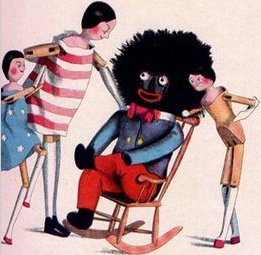

Nope, Carol's just a racist. I blame the parents.
WG
She refused to apologise properly, brushing the comment off as lighthearted banter and not racist.
This has sparked a whole debate. are golliwogs racist? A golliwog, in case you don't know, is a black rag doll with big red lips and wide eyes. The word is thought to be a combination of Golly and Polliwog (tadpole) with possible play on Scalliwag, so a mischievous, slimy black guy who says golly a lot. Greeeat. It's kind of like a cartoon of a minstrel (Oh. i've just worked out why those chocolates I used to like in the 80s were called Minstrels. And why they don't make them any more...riiiight.) anyway, it's Darkie iconography squared. If you can't get your head around this being offensive, imagine the white equivalent. it would have to be a vivid shade of pink, have lank colourless hair, blue watery eyes, and be called something comparing it to pink marine life and lame white slang. Neatoshrimp, perhaps? Now, imagine that this is the only racial representation of you in your childhood bookshelf as a child. And the book calls you 'a horrid sight'. And then 100 years later, when, as white people, we've fought for equality against huge odds, and now even have a white US president, and everything feels like it might finally be getting cool.... some talentless presenter who's the daughter of a right-wing ex prime minister from hell calls you that. Not cool, Thatcher, not cool.
The thing is, at a time when black people were being segregated, attacked and oppressed, still suffering the aftermath of slavery, A white American-English writer, Florence Kate Upton, wrote a story which taught that although black people might seem unfamiliar and frightening to her young, white, European audience, they were good people and worth making friends with. when the Golliwog first appears in Upton's book, he's presented as kind of scary and ugly only because he's unfamiliar, but later turns out to be a friendly and fun companion to the other toys. her depiction of a blackface minstrel doll having adventures with a pair of (white) wooden dutch dolls can be read as a pretty simplistic allegory of racial equality. It's just that she used an image that we, now, understand to be inherently racist. I'd like to think the Golliwog doll could be reclaimed as a positive Black toy, but it's difficult when the abbreviated form, wog, is an incredibly nasty racial slur for Black and Asian people in Britain. If you aren't from the UK and want to know how bad this is, look up David Oluwale- the inspiration for the play Nationality: Wog.
This is why Carol Thatcer calling ANYONE a Golliwog, even off air, is bad. While the original Golliwog was a naive and inherently racist portrayal of Blackness, but it was done with good intentions, and was right for its time. Over 100 years of not-too-morally-firm-from-white-people's-perspective history later, There is no WAY of not reading it as a slur. Unless the tennis player in question ACTUALLY looks like a jet black rag doll in a minstrel costume. if thaqt's the case, it was a fair comment and she's off the hook. let's see, shall we?
Nope, Carol's just a racist. I blame the parents.
WG
Tuesday, 3 February 2009
An unfortunate (or deliberate?) choice of words.
I'm a dirty, dirty lady, it's true, but i can't help noticing a masturbation reference at the end of this ad for thrush treatment. What's the verdict? Deliberate, or all in my grubby little mind?
http://www.canesten.co.uk/latest-ad.htm
Answers on a postcard, or in comments.
WG
http://www.canesten.co.uk/latest-ad.htm
Answers on a postcard, or in comments.
WG
Sunday, 1 February 2009
In praise of fucking swearing.
Once again mindless viewing of prime time TV (it may even have been the One Show again - what's happening to me?) has sparked the latest diatribe.
Apparently we all swear too much and civiliasation is coming to an end as a result. We know this because of the ubiquitous random talking heads in a busy high street segment. "There's too much of it. I don't like hearing it. It's the sign of a limited vocabulary."
Well thank you, Captain Eloquent. Pointing out the deficiencies in the vocabularies of others using one of the biggest clichés of them all, the old. 'People who swear do so because they don't know any other words' tripe. Hey, I used the word 'the' seven times so far.. well eight now. Does that make my vocab limited? Fuck cunt bollocks shit wank twat bastard cock. Is it any more limited now?
Some of the most eloquent voices in recent history have been the sweariest. Bill Hicks, George Carlin? Both famous for two things: 1) Absolutely foul, disgusting language that takes your breath away even when you're expecting it and 2) Some of the most incisive, sensitive and poetic examples of the English language around. Check them out. Their vocabularies were not limited; the minds of people who tried to supress them because of their choices of words were. Severely. Carlin was arrested for indecency after his "Seven Dirty Words" bit was aired on a local New York Radio station in 1973. The case was appealed to the U.S. Supreme Court, where the justices ruled 5-4 that the sketch was "indecent but not obscene," giving the FCC broad leeway to determine what constituted indecency on the airwaves. The Seven Dirty Words bit, as well as being funny, critiques the reasons that certain words are banned from the airwaves. The reaction it got actually changed the law.
Today, I'd say one of the most eloquent writers and performers around is Charlie Brooker, who gave us the glorious new word 'Cunthive'. That's not a limited vocabulary, that's genius. In fact, it's fucking genius.
Billy Connolly described the way Glaswegians use swearing as a form of punctuation, a rhythm which adds momentum and force to the conversation. I think that's pretty valid. Every other word being 'fuck' doesn't mean that the other half of what's being said isn't eloquent. It's just being intensified. It's at worst a dialectal tic, but I don't see anyone sending complaints in about Lloyd Grossman or Johnothan Ross's idiosyncrasies (actually, scratch that last one...) However Gordon Ramsay (not my favourite person admittedly) makes the national news because his latest Kitchen Nightmares show had a "fuck" every 20 seconds (insert porn joke here). Well, no shit, Sherlock. the man is more famous for his love of saying 'fuck' than for his cooking. His last show was called the F-word, for fuck's sake! Complaining because Ramsay swore? That's like complaining that Graham Norton is too Irish and gay (although I'm sure that's been done.) Click the fucking remote over to the One Show if you don't like it. I'm sure you'll get all the vocabulary you can handle there.
WG
Apparently we all swear too much and civiliasation is coming to an end as a result. We know this because of the ubiquitous random talking heads in a busy high street segment. "There's too much of it. I don't like hearing it. It's the sign of a limited vocabulary."
Well thank you, Captain Eloquent. Pointing out the deficiencies in the vocabularies of others using one of the biggest clichés of them all, the old. 'People who swear do so because they don't know any other words' tripe. Hey, I used the word 'the' seven times so far.. well eight now. Does that make my vocab limited? Fuck cunt bollocks shit wank twat bastard cock. Is it any more limited now?
Some of the most eloquent voices in recent history have been the sweariest. Bill Hicks, George Carlin? Both famous for two things: 1) Absolutely foul, disgusting language that takes your breath away even when you're expecting it and 2) Some of the most incisive, sensitive and poetic examples of the English language around. Check them out. Their vocabularies were not limited; the minds of people who tried to supress them because of their choices of words were. Severely. Carlin was arrested for indecency after his "Seven Dirty Words" bit was aired on a local New York Radio station in 1973. The case was appealed to the U.S. Supreme Court, where the justices ruled 5-4 that the sketch was "indecent but not obscene," giving the FCC broad leeway to determine what constituted indecency on the airwaves. The Seven Dirty Words bit, as well as being funny, critiques the reasons that certain words are banned from the airwaves. The reaction it got actually changed the law.
Today, I'd say one of the most eloquent writers and performers around is Charlie Brooker, who gave us the glorious new word 'Cunthive'. That's not a limited vocabulary, that's genius. In fact, it's fucking genius.
Billy Connolly described the way Glaswegians use swearing as a form of punctuation, a rhythm which adds momentum and force to the conversation. I think that's pretty valid. Every other word being 'fuck' doesn't mean that the other half of what's being said isn't eloquent. It's just being intensified. It's at worst a dialectal tic, but I don't see anyone sending complaints in about Lloyd Grossman or Johnothan Ross's idiosyncrasies (actually, scratch that last one...) However Gordon Ramsay (not my favourite person admittedly) makes the national news because his latest Kitchen Nightmares show had a "fuck" every 20 seconds (insert porn joke here). Well, no shit, Sherlock. the man is more famous for his love of saying 'fuck' than for his cooking. His last show was called the F-word, for fuck's sake! Complaining because Ramsay swore? That's like complaining that Graham Norton is too Irish and gay (although I'm sure that's been done.) Click the fucking remote over to the One Show if you don't like it. I'm sure you'll get all the vocabulary you can handle there.
WG
Subscribe to:
Posts (Atom)
